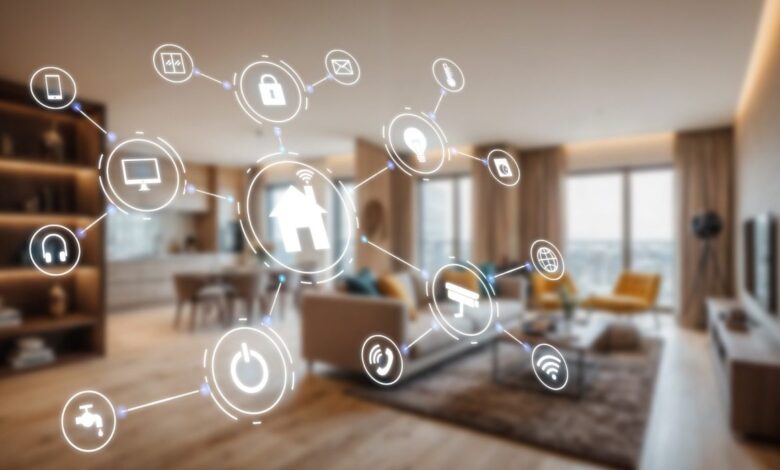
The concept of the smart home has rapidly evolved from a collection of isolated, novelty gadgets into a highly integrated, intelligent ecosystem. In the early stages of home automation, users relied on disparate applications to control individual smart bulbs, thermostats, and security cameras. This fragmented approach created operational friction, limiting the widespread adoption of Internet of Things technologies.
Today, the smart home industry is undergoing a foundational paradigm shift driven by unified connectivity standards, advanced artificial intelligence, and edge computing. The future of home automation lies in seamless interconnection, where devices do not merely respond to direct user commands but communicate natively with one another to anticipate human needs.
Understanding the primary technological trends shaping this interconnected ecosystem is essential for analyzing the future trajectory of consumer technology and residential design.
The Open-Standard Revolution and Protocol Interoperability
Historically, the largest barrier to a fully unified smart home was the prevalence of proprietary ecosystems. Major technology manufacturers built walled gardens, forcing consumers to commit to a single brand ecosystem to ensure device compatibility. This fragmentation ended with the introduction and widespread adoption of new open-source connectivity standards.
The Matter Protocol and Universal Compatibility
Matter, a unified connectivity protocol developed by a consortium of global technology leaders, serves as the cornerstone of modern device interconnection. Operating as an open-source application layer, Matter allows devices from different manufacturers to communicate natively over local networks. By removing the dependency on cloud-based bridges for cross-brand communication, Matter ensures that an appliance from one manufacturer can trigger an action in a sensor from another instantly and securely.
Thread Networking and Self-Healing Infrastructure
While Matter establishes a common language for devices, Thread provides the network architecture required for high-reliability transmission. Thread is a low-power, IP-based wireless mesh networking protocol designed specifically for smart home environments.
Unlike traditional Wi-Fi networks, which rely on a centralized router that represents a single point of failure, a Thread network distributes data routing across all connected devices. If a single device or router node loses power or connectivity, the mesh network automatically reroutes data paths, maintaining full system functionality without human intervention.
The Shift from Cloud Reliance to Local Edge Computing
Early Internet of Things architectures relied heavily on cloud computing. When a user interacted with a smart device, the command traveled from the home network to a remote cloud server, processed the instruction, and sent a command back to the device. This framework introduced latency and exposed households to systemic service outages and security vulnerabilities.
Low-Latency Operational Continuum
Modern smart home architectures prioritize edge computing, where data processing occurs locally on network hubs or the devices themselves. Local processing eliminates the latency inherent in cloud routing, resulting in near-instantaneous execution of automated tasks. For instance, a motion sensor detecting activity can activate a hallway light fixture within milliseconds, mimicking the performance of traditional hardwired electrical systems.
Enhanced Privacy and Data Autonomy
By processing data locally, smart homes significantly reduce the volume of sensitive personal information transmitted over the open internet. Local processing keeps biometric profiles, behavioral patterns, and internal video feeds within the physical perimeter of the home. This shift mitigates the risk of cloud-based data breaches and addresses consumer anxieties regarding corporate surveillance and data monetization.
Predictive Automation Powered by Artificial Intelligence
The true value of a smart home materializes when reactive automation transitions into proactive, predictive automation. Instead of requiring users to schedule routines manually or use voice activation, integrated artificial intelligence analyzes environmental data and user behaviors to manage the domestic environment autonomously.
Ambient Intelligence and Behavioral Mapping
Ambient intelligence refers to electronic environments that are sensitive and responsive to the presence of people. By aggregating data from smart flooring, occupancy sensors, and wearable devices, an artificial intelligence engine maps the daily behavioral patterns of residents.
If the system recognizes that a resident typically wakes up at a specific time, it can modulate ambient temperatures, adjust window treatments, and activate kitchen appliances in advance, creating an optimized environment without requiring manual programming.
Context-Aware Sensor Fusion
Sensor fusion is the process of combining data from multiple disparate sensors to gain a more accurate and comprehensive understanding of an environment than any single sensor could provide. For example, a smart window sensor alone can only detect whether a window is open.
When fused with data from an outdoor air quality monitor, an internal thermostat, and an HVAC system, the home ecosystem can make an intelligent, multi-variable decision: it can disable the air conditioning, alert the user to an outdoor pollen spike, or automatically close the window via motorized actuators to maintain internal air quality.
Energy Optimization and Grid Integration
As global energy costs fluctuate and environmental sustainability becomes a primary consumer focus, the smart home is transforming into an active participant in decentralized energy management systems.
Intelligent Resource Distribution
Interconnected Internet of Things devices allow homeowners to manage electrical consumption dynamically. Smart electrical panels and appliances communicate with residential solar arrays and battery storage systems to optimize energy use.
During peak utility pricing hours, the smart home can automatically shift heavy electrical loads, such as electric vehicle charging or water heating, to periods of low demand or high solar generation, lowering operating costs without compromising convenience.
Predictive Maintenance of Home Infrastructure
By continuously monitoring operational data, smart home systems can detect early indicators of mechanical degradation in critical infrastructure. Water sensors placed near appliances can identify micro-leaks before they cause structural damage, automatically closing main water valves to prevent flooding.
Similarly, monitoring the power draw of an HVAC compressor can reveal mechanical inefficiency, prompting the system to alert the homeowner and schedule preventative maintenance before a complete system failure occurs.
Managing the Security Perimeters of Connected Homes
As the number of interconnected devices within a single residence grows, the potential attack surface for cyber threats expands concurrently. Securing the modern smart home requires a multi-layered defensive strategy that treats the home network with the same rigor as an enterprise IT environment.
Device Attestation and Cryptographic Authentication
Under modern security standards, every device entering a smart home ecosystem must undergo a strict attestation process. Cryptographic keys embedded in the hardware verify the authenticity and origin of the device, ensuring that counterfeit or tampered hardware cannot infiltrate the home network. Furthermore, all local and external communication paths are encrypted by default, preventing unauthorized interception of data packets.
Network Segmentation and Virtual Firewalls
To prevent a single compromised device from exposing the entire household network, advanced routers and smart hubs utilize network segmentation. By placing Internet of Things devices on an isolated virtual local area network separate from primary computing devices like laptops, smartphones, and financial storage drives, homeowners isolate potential breaches. If a smart appliance is compromised via a firmware vulnerability, the attacker remains contained within that specific network segment, unable to access sensitive personal data.
Frequently Asked Questions
What is the primary difference between traditional home automation and an AI-driven smart home?
Traditional home automation operates entirely on rigid, user-defined rules, such as turning on a light at a specific hour or when a specific button is pressed. An AI-driven smart home utilizes machine learning to observe occupant behaviors, analyze environmental data from multiple sensors simultaneously, and autonomously create and adjust its own operational routines based on changing contexts.
Can old smart devices that do not support Matter still function in a modern interconnected home?
Yes, older legacy devices can often be integrated into a Matter-supported ecosystem through the use of software bridges or updated smart hubs. Many manufacturers have released firmware updates that enable existing hubs to translate proprietary legacy signals into Matter-compliant commands, extending the operational lifespan of older hardware investments.
How does an interconnected smart home maintain functionality during a total internet outage?
When a smart home architecture prioritizes local edge computing and utilizes protocols like Matter and Thread, the internal ecosystem remains fully operational during an internet outage. Devices can still communicate with one another, sensors can trigger local automations, and users can control systems via local hubs. Only features requiring external cloud access, such as remote monitoring from outside the home or real-time weather data updates, will be temporarily disabled.
What role does biometrics play in the future of smart home security?
Biometrics shifts smart home authentication away from passwords and physical keys toward immutable physical traits. Future systems integrate localized facial recognition, gait analysis, and voice print authentication into access control entryways and localized interfaces, ensuring that home systems adjust settings for the specific authorized individual interacting with the environment.
How do smart homes adapt to multi-occupant households with conflicting preferences?
Advanced smart home systems manage multi-occupant dynamics by utilizing localized tracking through wearables, smartphones, or room-based sensors. When individuals with conflicting preferences occupy the same space, the central intelligence system can default to a calculated average baseline, prioritize the preferences of the primary user, or implement zone-based environmental control to satisfy both individuals simultaneously.
What is the expected impact of 5G and satellite connectivity on smart home deployment?
While local mesh networks handle the internal communications of a smart home, advanced wide-area connectivity like 5G and low-Earth-orbit satellite systems provide ultra-reliable, high-bandwidth backup internet connections. This ensures that homes in rural or poorly served areas maintain high-speed external connectivity, allowing for real-time remote monitoring, rapid firmware updates, and dependable communication with external utility grids.